
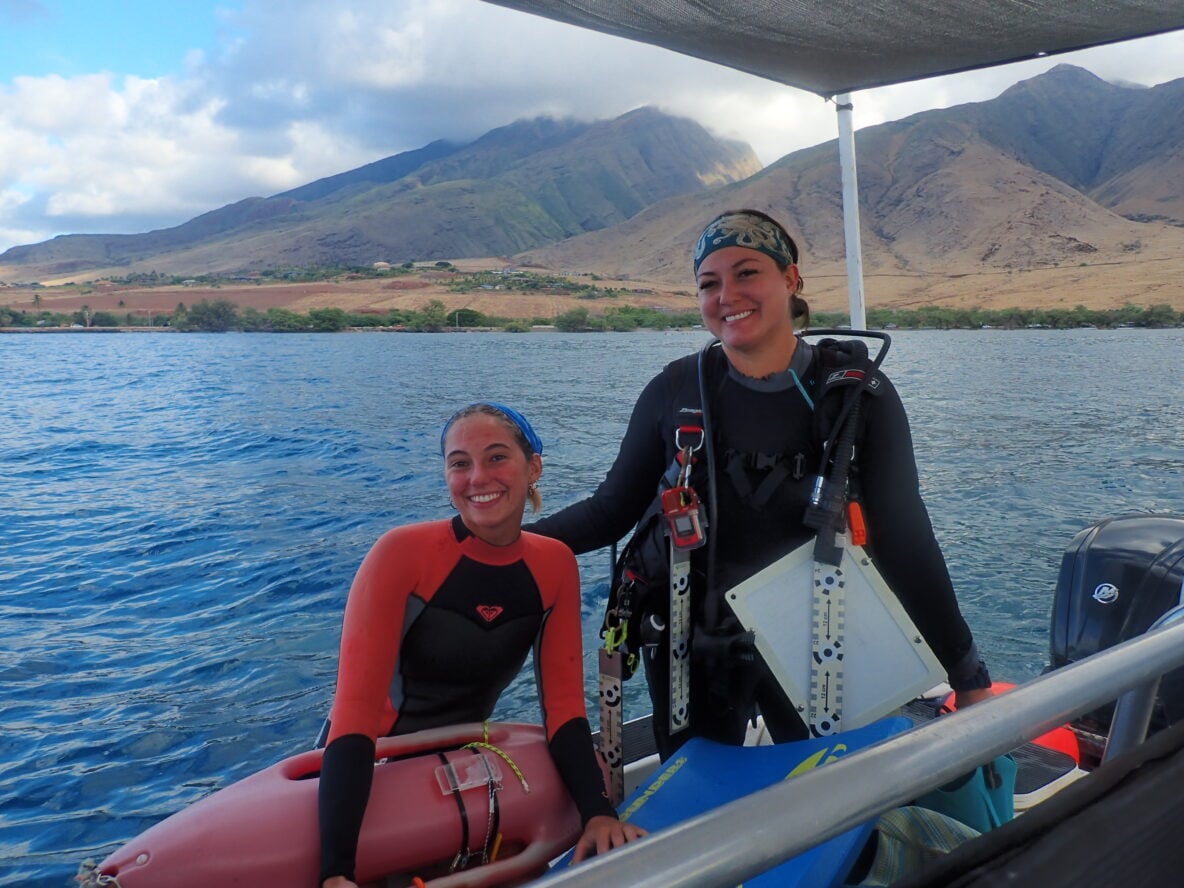
Most days our boats are full of guests here to see whales, turtles, and reefs. But some of the trips we’re proudest of over the last couple of years haven’t had a single guest aboard. Those runs carried scientists and coolers of coral instead, headed out to one of the most important reefs in Hawaiʻi.
Since 2024, we’ve been proud to support The Nature Conservancy’s Maui Marine Program and its partners on a project studying Super Reefs. A lot of that work happens at Olowalu, a reef important enough that people call it the Mother Reef of Maui Nui.
Here’s how a whale watch outfit ended up in the middle of coral science.
What is a “Super Reef”?
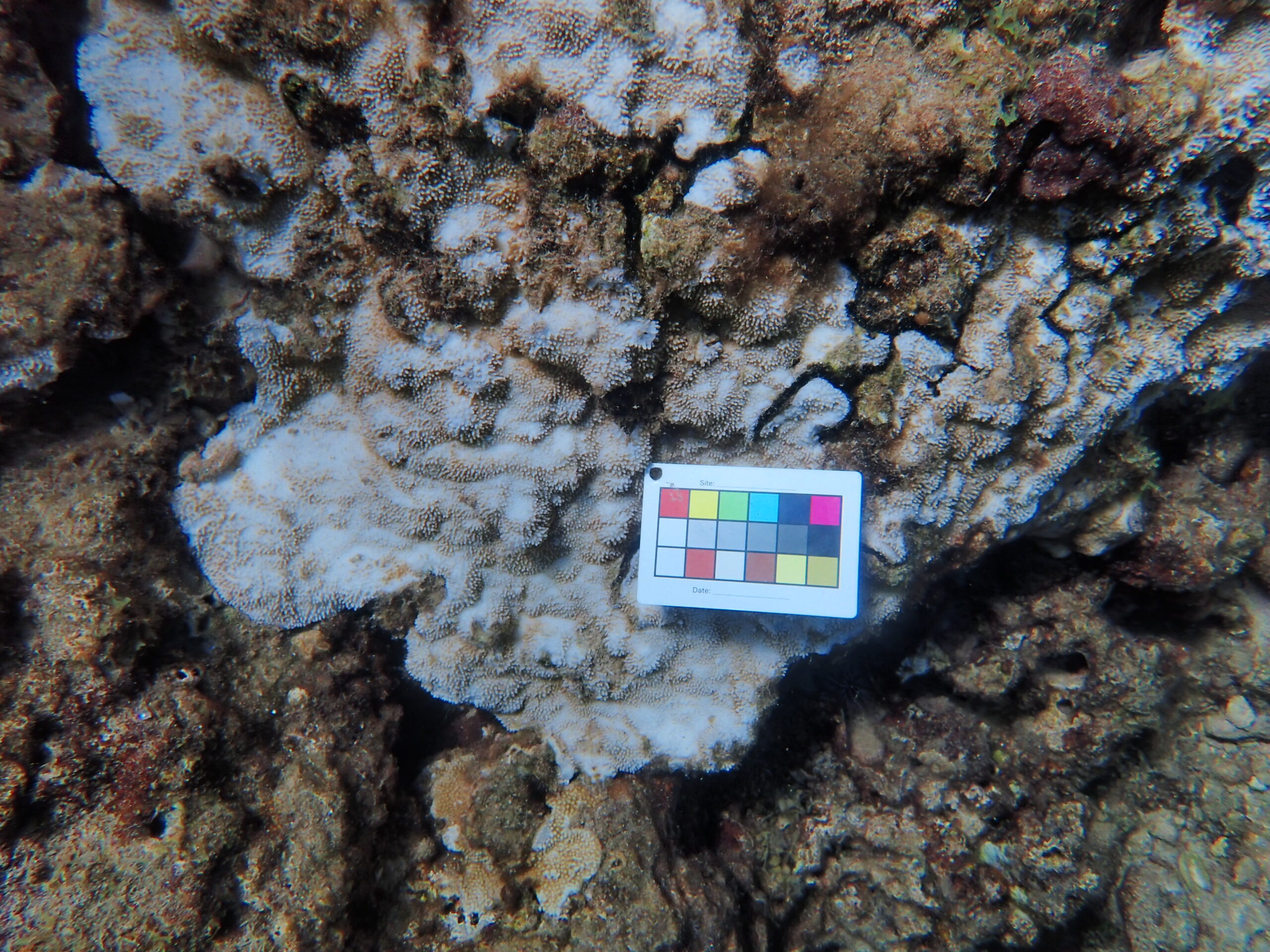 As the ocean warms, corals are increasingly exposed to marine heatwaves — extended stretches of unusually warm water. When corals get too hot for too long, they expel the tiny algae living in their tissues that give them both their color and most of their food. The coral turns bone-white and, if the heat doesn’t ease, it can starve. This is coral bleaching, and it has already killed or damaged reefs around the world.
But not all corals respond the same way. Some individuals, and some reefs, tolerate heat noticeably better than their neighbors. Scientists call these standout reefs “Super Reefs” — places where the corals are naturally more heat-tolerant (better able to survive high temperatures) and, just as importantly, well-connected to other reefs downstream.
The hope is pretty straightforward. Find the corals that already handle heat well, figure out what makes them tough, and use them to help weaker reefs recover as the ocean warms.
The Super Reefs project is led by The Nature Conservancy, Stanford University, and the Woods Hole Oceanographic Institution (WHOI), alongside local partners here on Maui.
Why Olowalu?
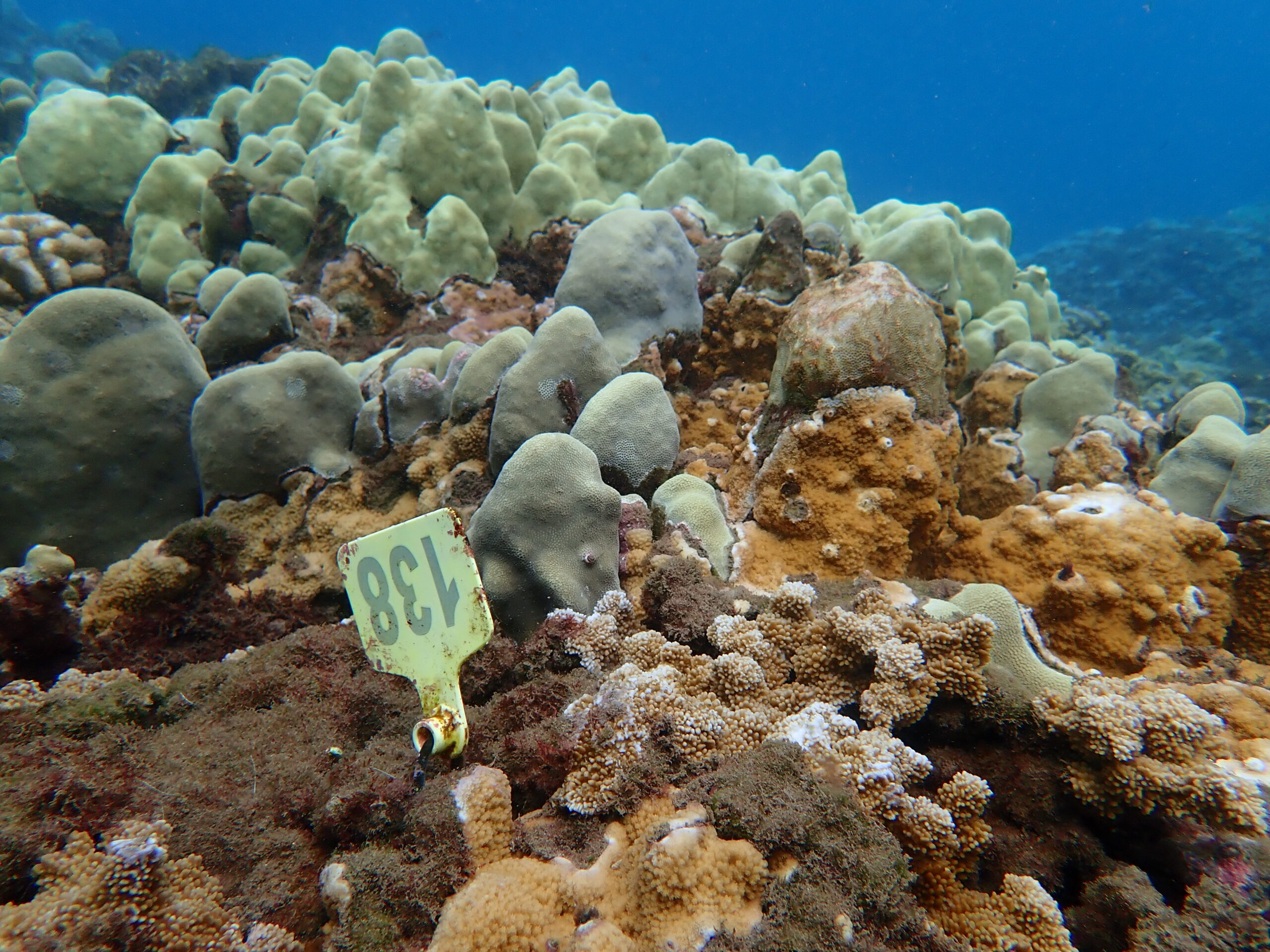
Coral colonies are tagged to make them easier to locate for long-term monitoring efforts (Photo: The Nature Conservancy)
Olowalu is a lot more than a good snorkel spot. It’s one of the largest and oldest fringing reefs in the main Hawaiian Islands, with hundreds of coral species, green sea turtles, and one of the biggest manta ray populations in the country.
Its most important role, though, is invisible to snorkelers. During coral spawning, colonies release larvae — free-floating baby corals called planulae — into the water. Currents carry those larvae for miles, where they settle and grow into brand-new colonies. At Olowalu, that dispersal reaches reefs across West Maui and all the way to Lānaʻi and Molokaʻi. Because it seeds so many other reefs, Olowalu is known as a source reef, or “Mother Reef.”
That “larval connectivity” is exactly what scientists look for in a Super Reef. A reef like this one matters twice over: it can ride out warmer water itself, and it can help reseed the reefs that can’t. So protecting Olowalu protects a much bigger web of reefs across Maui Nui.
What the science actually looks like
After thermal testing, corals are prepared to be outplanted on Maui’s reefs (Photo: The Nature Conservancy)
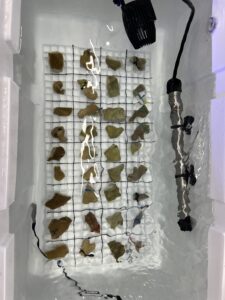
Coral fragments undergo heat-tolerance testing in the lab (Photo: The Nature Conservancy)
Finding and testing the tough corals. From July to August 2024, the team ran surveys across West Maui — from Honolua Bay down to Olowalu and Coral Gardens — collecting small coral fragments (little pieces taken from healthy corals, which regrow at both the sample site and in the lab). Back on shore, researchers put these fragments through controlled heat-tolerance testing: essentially stress-testing corals from different species and different locations to measure how much warming each one can withstand before it bleaches.
Checking on the “parent colonies.” The fragments come from larger, original corals known as parent colonies. Part of the ongoing work is returning to those same parent colonies to see how they’re faring under real, natural ocean conditions — not just in the lab.
Planting the survivors. Once they’d sorted corals by how much heat each one could take, the team outplanted them at Olowalu — “outplanting” just means transplanting coral fragments back onto the reef so they can grow in place.
Coming back, season after season. You can’t plant coral and walk away. Every few months, researchers head back out to check on the outplanted corals and see how they’re adapting, growing, and holding up.
Where our boats come in
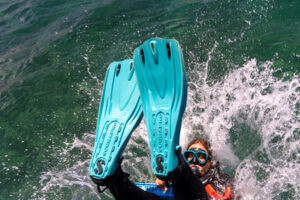
Our research vessel is the perfect platform for diving operations (Photo: The Nature Conservancy)
None of this fieldwork happens from shore. Getting scientists, gear, and living coral out to these sites and back safely takes boat time and captains who know this stretch of coast well.
That’s where we come in. Ultimate provided boat support at a fraction of our usual charter rate so the team could:
- reach study sites across West Maui safely and efficiently
- collect coral fragments and check on parent colonies
- return every few months to monitor the outplanted corals at Olowalu
Money from our whale watching and snorkel tours covers the boat time, fuel, and crew hours that make this kind of fieldwork possible — the sort of work that’s usually too slow or too expensive for a research team to pull off on its own. So when you come out with us, you’re helping keep a research boat on the water, too.
Why it matters for Maui
Reefs are the foundation of Maui’s nearshore waters. They feed our fisheries, give turtles and manta rays a place to live, and knock the energy out of waves before they hit the shore. As the ocean keeps warming, our reefs are going to be under stress no matter what. The real question is which ones can lead the recovery, and how we help them do it.
The Super Reefs work at Olowalu is one of the more hopeful things happening in ocean science right now. Some corals are already built to handle a warmer future, and this project is working out how to use them to protect the reefs that aren’t. We’re proud our boats have been a small part of it, and it’s just one of many research collaborations happening behind the scenes at Ultimate.
Come see the reefs we’re working to protect
Every tour helps fund the research on this page. Join us on the water to experience Maui’s whales, turtles, and reefs up close.
→ Book a whale watch or snorkel tour
Are you a researcher or organization?
If you’re a scientist, educator, or institution looking for vessel support in Maui Nui, we’d love to hear from you.